

Appendix 1: Legal Work
Providing legal assistance to individuals
Under Section 40 of the Irish Human Rights and Equality Commission Act 2014, we can, in certain circumstances set down in law, give legal assistance to members of the public who wish to take a case relating to equality or human rights law before the Workplace Relations Commission, the Labour Court or the courts. The assistance provided can include legal advice only or legal advice and representation.
At the beginning of the year, we had 414 individual clients who had been granted legal assistance and whose cases were ongoing. Of these, 79 had been approved for legal advice and 335 had been approved for legal advice and representation. A further 37 applicants were awaiting a decision on their application for assistance.
Applications for legal assistance
In addition to the 37 applications carried over from 2024, an additional 283 new individual applications for legal assistance were received during the year.
This year:
- 130 applications were approved for assistance, of which:
- 32 approvals were for legal advice only; and
- 98 approvals were for legal advice and representation;
- 53 applications were declined; and
- 32 applications were withdrawn or discontinued.
We completed work on 44 individual cases assisting 88 clients. 15 clients (across 13 individual cases) were granted legal advice only, while 73 clients (across 31 individual cases) were provided with legal advice and representation.
Details of these completed matters including some that had been opened in previous years are set out below.
Legal advice assistance completed
During the year, 15 clients relating to 13 case files were granted legal advice assistance, but not legal representation, across the following areas:
Advice only under the Employment Equality Acts
Ground: Race
Number of clients: 1
Details: We provided a grant of legal assistance for legal advice to a client regarding a claim of racial discrimination and harassment in his previous place of employment, which led to his resignation. The client was provided with legal advice on racial discrimination and harassment in the employment context and the legal remedies available.
Ground: Protected Leave
Number of clients: 1
Details: We provided a grant of legal advice to a client in relation to a complaint that they were excluded from a promotion process while on parents’ leave. The client also complained of a failure to provide reasonable accommodation while on certified sick leave. The client was provided with legal advice in relation to both matters.
Ground: Disability / Reasonable Accommodation
Number of clients: 1
Details: We provided a grant of legal advice to a client with a disability regarding a claim of discrimination in seeking to access employment in the public sector. The client complained that an offer of employment was revoked due to the employer’s perception that the role was unsuitable for a person with the client’s particular disability. The client was provided with legal advice on their rights under employment equality legislation.
Advice only under the Equal Status Acts 2000 – 2018
Ground: Disability / Reasonable Accommodation
Number of clients: 1
Details: We provided a grant of legal advice to a client with a disability who had sought reasonable accommodation in order to access their accommodation. The client complained that the landlord/management company failed to provide the reasonable accommodation sought. Legal advice was provided regarding the relevant rights arising under the Equal Status Acts.
Ground: Race
Number of clients: 1
Details: We provided legal advice to a student who complained that they had experienced discrimination on the ground of race in trying to access the services of a third level education provider. The client complained that the provider treated them less favourably in declining them access to course materials and lectures following their enrolment on their chosen course. We provided legal advice to the client regarding the interaction between the State’s Springboard+ programme and the third level institute.
Ground: Membership of the Traveller Community
Number of clients: 2
Details: We provided a couple with practical assistance and legal advice regarding a complaint of discrimination against a hotel on the grounds of membership of the Traveller community.
Ground: Disability
Number of clients: 1
Details: We provided legal advice to a client, who is a minor, regarding an incident of indirect discrimination on the grounds of disability in a school.
Advice only under the Intoxicating Liquor Acts 1988 - 2018
Issue: Fair Procedures / Access to Temporary Protection
Number of clients: 1
Details: We provided practical assistance and legal advice to a Ukrainian client of Roma ethnicity in relation to their application for Temporary Protection.
Issue: Disability
Number of clients: 1
Details: We provided legal advice to a client regarding an appeal before the Disabled Drivers Appeal Board. Subsequently the client advised us that they successfully obtained a Primary Medical Certificate to access the Disabled Drivers and Disabled Passengers Scheme (DDP).
Issue: Disability
Number of clients: 2
Details: We provided legal advice to two clients who wished to challenge the proposed transition of an adult out of Wardship into the Assisted Decision-Making Capacity Act system.
Issue: Housing
Number of clients: 1
Details: We provided legal advice to a client in relation to their complaint against a County Council that the client alleged failed to provide them with suitable accommodation.
Issue: Fair Procedures
Number of clients: 1
Details: We provided legal advice to a client who had referred a complaint of discrimination to the Workplace Relations Commission on his behalf and on behalf of his wife alleging that a service provider had discriminated against them on the ground of disability and/or failed to provide reasonable accommodation.
Legal representation assistance completed
Cases under the Equal Status Acts 2000 – 2018
Members of the Traveller Community v. A Restaurant
Ground: Membership of the Traveller Community
Number of clients: 6
Issue: We provided legal advice and representation to this extended family who are members of the Traveller community in relation to a complaint of discrimination when a reservation at a restaurant was cancelled. A complaint of discrimination on the grounds of membership of the Traveller community was submitted to the WRC under the ESA.
Outcome: With the benefit of our legal assistance, this case settled to the satisfaction of all clients, including an apology and compensation.
Members of the Traveller Community v. A Hotel
Ground: Membership of the Traveller community
Number of clients: 12
Issue: We provided legal advice and representation to twelve family members in relation to a complaint of discrimination when trying to access accommodation from a hotel. A complaint of discrimination on the grounds of membership of the Traveller community was submitted to the WRC under the ESA.
Outcome: With the benefit of our legal assistance, this case settled to the satisfaction of all clients, with the hotel issuing an apology and compensation to the clients.
An Individual v. A Service Provider
Ground: Disability
Number of clients: 1
Issue: We provided legal advice and representation to a Deaf individual in relation to the failure of a service provider to provide reasonable accommodation and discrimination on the grounds of disability.
The client in this case was refused service when they attempted to gain access to the service with the assistance of an Irish Sign Language interpreter.
Outcome: The matter settled to the satisfaction of the client at mediation before the WRC.
A Pupil (Minor suing by her Next Friend) v. A Secondary School
Ground: Membership of the Traveller Community
Number of clients: 1
Issue: We provided legal advice and representation to a minor client who was left in an empty classroom without supervision for hours after they arrived late for school. A complaint of discrimination on the grounds of membership of the Traveller community was submitted to the WRC under the ESA.
Outcome: The case was heard in an adjudication before the WRC in September 2024. The adjudication officer found that the complainant had failed to establish a prima facie case of discrimination arising from their membership of the Traveller community.
An Individual v. A Shopping Centre
Ground: Race / Ethnicity
Number of clients: 1
Issue: We provided legal advice and representation to a client who is a member of the Roma community in relation to a complaint of discrimination and harassment on the grounds of race, experienced when attempting to access a shopping centre. The client submitted a complaint of discrimination on the grounds of race to the WRC under the ESA.
Outcome: The matter was finalised to the satisfaction of the client.
An Individual v. A Healthcare Insurance Provider
Ground: Disability
Number of clients: 1
Issue: We provided legal advice and representation to a Deaf individual in relation to complaint of discrimination on the grounds of disability while accessing the services of a healthcare insurance provider. The service provider required the client to provide prior written permission to the use of an Irish Sign Language interpreter when contacting the service over the phone.
Outcome: The matter settled to the satisfaction of the client at mediation before the WRC.
Danut Nae v. Supervalu
Ground: Race
Number of clients:1
Issue: We provided legal advice and representation to this client in relation to a complaint of discrimination and harassment on the grounds of race when accessing services in a grocery shop.
Outcome: The WRC adjudication officer found that the complainant had failed to establish a prima facie case of discrimination on the grounds of race.
A Customer v. A Shop
Ground: Access to services
Number of clients: 1
Issue: We provided legal advice and representation to a Deaf client in relation to a complaint of discrimination on the grounds of disability when accessing a shop. The client submitted a complaint of discrimination on the grounds of disability to the WRC under the ESA.
Outcome: The matter settled to the satisfaction of the client at mediation before the WRC.
A Member of the Traveller Community v. A Shop
Ground: Membership of the Traveller Community
Number of clients: 1
Issue: We provided legal advice and limited representation to a client in relation to a complaint against a shop regarding discrimination on the grounds of membership of the Traveller community.
Outcome: Following legal advice, the client decided not to proceed with the matter.
Members of the Traveller Community v. A Grocery Store
Ground: Membership of the Traveller Community
Number of clients: 3
Issue: We provided legal advice and representation to three family members in relation to a complaint of discrimination and harassment when attempting to access services from a grocery store. A complaint of discrimination on the grounds of membership of the Traveller community was submitted to the WRC under the ESA.
Outcome: The matter settled on the day of the hearing to the satisfaction of both parties.
William Gallagher v. Jenny Brennan and Matthew Hannigan
Ground: Housing Assistance
Number of clients: 1
Issue: We provided practical assistance, advice and legal representation before the WRC to a client in a case of discrimination and victimisation by his landlords on the housing assistance payment ground.
Outcome: The matter was successful at WRC adjudication, and the Complainant was awarded a total of €23,000 in compensation. This amount comprised the jurisdictional maximum award of compensation for discrimination, which is €15,000, and a further award of €8,000 for the effects of victimisation.
An ISL User v. A Utility Service Provider
Ground: Disability
Number of clients: 1
Issue: We provided legal advice and representation to a Deaf client in relation to a complaint of discrimination on the grounds of disability. The client had attempted to phone the utility provider with the assistance of an ISL interpreter. The service provider required the client to provide prior written permission to the use of an Irish Sign Language interpreter when contacting the service over the phone.
Outcome: The matter settled on the day of the hearing to the satisfaction of both parties.
A Pupil and their Parent v. A Secondary School
Ground: Disability
Number of clients: 2
Issue: We provided advice and legal representation before the WRC to a minor client and their parent in relation to a complaint of discrimination, harassment and sexual harassment experienced by the child at school.
Outcome: The matter settled on the day of the hearing to the satisfaction of both parties.
A Family v. Offaly County Council
Ground: Housing
Number of clients: 4
Issue: We provided legal advice and limited representation to a family of four (two adults and two young children) in relation to a request seeking emergency accommodation from Offaly County Council.
Outcome: The clients were offered vouchers to access emergency accommodation; however, they were unable to source emergency accommodation using the voucher.
Members of the Traveller Community v. A Coffee Shop
Ground: Membership of the Traveller Community
Number of clients: 10
Issue: We provided legal advice and representation to this extended family in relation to a complaint of discrimination at a coffee shop in the West of Ireland. The family, which included four young children, had been on holiday and went to visit a nearby café and bakery. When the clients arrived in the car park in two campervans and a car, management told them they couldn’t park there as their vehicles were too big. When the clients approached the café and bakery, the same management ran down in front of them and began closing the coffee shop, informing the clients that the café was closed. The clients were then followed out of the premises. A complaint of discrimination on the grounds of membership of the Traveller community was submitted to the WRC under the ESA.
Outcome: Mediation took place before the WRC and a settlement agreement was reached to the satisfaction of both parties, which included the payment of compensation.
Members of the Traveller Community v. A University
Ground: Membership of the Traveller Community
Number of clients: 4
Issue: We provided legal advice and representation to four separate clients in relation to a complaint of discrimination when attempting to access educational services within a university.
Outcome: The matter settled to the satisfaction of the four clients, to include an apology and compensation.
A Pupil and their Parent v. A Secondary School and A Statutory Body
Ground: Gender and Disability
Number of clients: 2
Issue: We provided legal advice and limited legal representation to a minor client and their parent regarding a request for reasonable accommodation for the State examinations. The clients were still awaiting a decision on their request two weeks before the commencement of the exams.
Outcome: The matter resolved when a positive decision was made on the client’s application for reasonable accommodation for the State examinations.
Ayman Abdul Samad v. Allied Irish Banks
Ground: Race
Number of clients: 1
Issue: We provided legal advice and representation to a client in an adjudication hearing before the WRC in relation to a claim of discrimination on the grounds of race under the ESA.
Outcome: The WRC adjudication officer found in the bank’s favour and the client decided not to appeal the decision.
Cases under the Employment Equality Acts 1998 – 2015
Mary Tracy v. Smurfit Kappa Ireland Ltd t/a the Educational Company of Ireland
Ground: Disability / Failure to Provide Reasonable Accommodation / Victimisation / Discriminatory Dismissal
Number of clients: 1
Issue: We provided legal advice and representation to a client in relation to a complaint of discrimination on the grounds of disability, failure to provide reasonable accommodation, victimisation and ultimately discriminatory dismissal.
The client disclosed details of her disability from the outset of her employment and sought reasonable accommodations, which were ultimately refused. She was dismissed while on sick leave for refusing to accept an alternative role offered to her.
Outcome: Following the adjudication hearing, the WRC found that the employer had failed to comply with employment equality legislation regarding the provision of reasonable accommodation for the client’s disability, and that she was directly discriminated against by the employer in relation to her dismissal from employment. The client was awarded compensation to the total of €64,000.
An Employee v. A Hotel
Ground: Membership of the Traveller Community
Number of clients: 1
Issue: We provided legal advice and representation to a client who was harassed during the course of his employment, including a physical assault, arising as a result of him being a member of the Traveller community.
Outcome: A settlement agreement was reached to the satisfaction of both parties on the day of the WRC hearing. The settlement includes the provision of Traveller specific awareness training to all staff within the hotel chain.
An Employee v. A State Department
Ground: Gender and Sexual Orientation
Number of clients: 1
Issue: We provided legal advice and representation before the WRC to a client in relation to a complaint of discrimination on the grounds of gender and sexual orientation, harassment and sexual harassment, which was brought against their employer on the basis of the actions of co-workers.
Outcome: The matter settled on the day of the hearing to the satisfaction of both parties.
Two Employees v A Fast Food Restaurant
Ground: Race
Number of clients: 2
Issue: We provided legal advice and representation to two separate clients in relation to a claim of racial harassment in the workplace, arising as a result of them both being members of the Roma community.
Outcome: A settlement agreement was reached to the satisfaction of both parties on the day of the WRC hearing, to include compensation.
Cases relating to Intoxicating Liquor Acts 1988 - 2018
Members of the Traveller Community v. A Licensed Premises
Ground: Discrimination on the ground of Membership of the Traveller Community
Number of clients: 4
Issue: We provided legal advice and representation to four clients in relation to the refusal of entry to a licenced premises in County Dublin. The four clients had booked a table in a bar to celebrate a birthday, and they were stopped by security at the door. The clients were asked if they had a booking and they responded that they did. The staff went inside to check the booking and, on their return, informed the clients that their booking was gone as they were 5 minutes late. During this time, the clients noted that other people were being let into the bar and that it appeared that these customers did not have bookings at all. We assisted the clients in bringing a complaint of discrimination against the licensed premises to the District Court on the grounds of membership of the Traveller community.
Outcome: On the date of the hearing, the matter settled to the satisfaction of the clients, including compensation.
A Member of the Traveller Community v. A Licensed Premises
Ground: Membership of the Traveller Community
Number of clients: 1
Issue: We provided legal advice and representation to a client in relation to a complaint of discrimination on the ground of membership of the Traveller community. The client had made a booking at a licensed premises in County Dublin over the phone. When they visited the premises in person to pay the required booking deposit, they were informed that they could no longer accept the booking. The client believed that this refusal was made on the basis of their membership of the Traveller community.
Outcome: This case was settled to the satisfaction of the client.
Members of the Traveller Community v. A Licensed Premises
Ground: Membership of the Traveller Community
Number of clients: 2
Issue: We provided legal advice and representation to two clients in relation to a refusal of service on a licensed premises in County Leitrim. The clients issued proceedings in the District Court and also made a complaint to the WRC to protect their position as it was not clear whether the liquor licence extended to the outdoor seating where the clients were refused service. In the District Court, the matter was struck out on the basis of incorrect jurisdiction on application of the Licensed Premises. At the WRC hearing, the licensed premises produced the license to cover the outside seating area, and the WRC therefore declined jurisdiction. New proceedings were again filed in the District Court.
Outcome: On the date of the hearing, the matter settled to the satisfaction of the clients, including compensation.
A Member of the Traveller Community v. A Licensed Premises
Ground: Membership of the Traveller Community
Number of clients: 1
Issue: We provided legal advice and representation to a client who is a member of the Traveller community in relation to a claim of discrimination against a hotel and licenced premises in County Donegal.
On St. Patrick's Day 2024, the client went into a hotel bar to watch a football game while his wife and grandchildren attended the local parade. He ordered a soft drink and he was refused service and informed that he was barred from the hotel. The manager cited previous noise complaints regarding a group of Travellers the client was with, resulting in the hotel refunding a number of customers the cost of their stay. The client disputed this claim, stating that no complaints were made to the group and that the group left the hotel without incident. He believed he was barred on the basis of his membership of the Traveller community.
Outcome: Following legal advice, the client decided not to proceed with the matter.
Cases relating to human rights
A Litigant v. WRC
Ground: Right to fair procedures
Number of clients: 1
Issue: We provided legal representation to a client to challenge a decision of the Workplace Relations Commission by way of judicial review in the High Court. The client brought a claim to the WRC in relation to a complaint of racial discrimination that he experienced while accessing services in a grocery shop. During the adjudication proceedings, concerns were raised regarding the client’s right of access to justice, having regard to the actions of the Adjudication Officer and their failure to adequately investigate the claim by making a determination on the claim notwithstanding a planned adjourned hearing date.
Outcome: On consent, an order was made by the High Court quashing the original decision of the WRC and remitting the case to the WRC for re-hearing before a different Adjudication Officer.
N and Ors v. Minister for Foreign Affairs and Ors
Ground: Citizenship by descent – equality under the Constitution
Number of clients: 2
Issue: A naturalised Irish citizen had to register the birth of their child abroad on the foreign birth register in order to have their child’s Irish citizenship recognised. The client brought a High Court challenge to the constitutionality of the Foreign Birth Register requirement, saying that it unlawfully discriminated against them and their family when compared to Irish citizens by birth, whose children were automatically Irish citizens when born abroad without the requirement for registration.
Outcome: The High Court heard this constitutional challenge over the course of two days in December. Judgment is awaited.
A Ukrainian Couple v. Department of Justice
Ground: Ukrainian nationals of Roma ethnicity refused Temporary Protection
Number of clients: 2
Issue: We provided legal advice and representation to a couple who are Ukrainian Roma nationals in relation to the husband’s refusal of Temporary Protection on arrival.
Outcome: Temporary Protection was granted to the husband, and the family were reunified.
An IP Applicant v. State Agency
Ground: International Protection / Reception Conditions / Accommodation / Age
Number of clients: 1
Issue: We provided legal advice and representation to a client who is an applicant for international protection whose age was in dispute. The client was deemed an adult by State Agencies and was refused appropriate child care services.
Outcome: Following engagement with the relevant State Agency and a further assessment, the client was provided with childcare services.
An IP Applicant v. State Agencies
Ground: International Protection / Reception Conditions / Accommodation / Age
Number of clients: 1
Issue: We provided legal advice and representation to a client who is an applicant for international protection whose age was in dispute. When the matter failed to resolve through engagement and correspondence, judicial review proceedings were issued against the relevant State Agencies.
Outcome: The matter settled to the satisfaction of the client.
Own Name Proceedings
In 2023, we used our power under section 41 of the IHREC Act and brought proceedings before the High Court in our own name, seeking to address the State’s failure to provide for the basic needs, including accommodation, of people recently arrived in Ireland and seeking international protection.
IHREC v The Minister for Children, Equality, Disability, Integration & Youth, & The Attorney General
Court: High Court and Court of Appeal
Commenced: 21 December 2023
Status of Case: Ongoing
Details: We brought proceedings before the High Court in our own name, seeking to address the State’s failure to provide for the basic needs, including shelter, of people recently arrived in Ireland and seeking international protection. Applicants for international protection (‘IP applicants’) are entitled to receive material reception conditions under EU and Irish law. Since 04 December 2023, not all IP applicants arriving in Ireland were offered State accommodation.
In 2024, the High Court declared that the State had failed in its duty to provide for the basic needs, including accommodation, for IP applicants who have recently arrived in Ireland and that this failure amounted to a breach of the applicants’ right to human dignity. The State filed a Notice of Appeal to the Court of Appeal against the judgment of the High Court. In 2025, the Court of Appeal proceedings continued.
Outcome: The appeal was heard in the Court of Appeal on 06 and 07 March 2025.
In its judgment, delivered on 30 July 2025, the Court of Appeal accepted that the Commission had proved that the IP applicants were in a situation of extreme material poverty. However, in granting the State's appeal, the Court of Appeal ruled that the Commission had not provided adequate evidence to prove that their physical or mental health was undermined or that they were in a state of degradation incompatible with human dignity.
In November 2025, the Supreme Court granted the Commission leave to appeal the Court of Appeal's ruling.
As of December, the case is ongoing.
Acting as amicus curiae
We can apply to the Superior Courts for liberty to appear as amicus curiae (‘friend of the court’) in proceedings before that court that involve, or are concerned with, the human rights or equality rights of any person. It is up to the Court, at its discretion, to grant or refuse our involvement.
As amicus curiae, we do not represent any of the parties in the case - rather we assist the Court in respect of the human rights and/or equality issues relevant to the case.
At the start of the year, we were involved in two cases as amicus curiae in the Superior Courts, of which one completed during the course of the year.
During the year, we sought and were granted liberty to intervene as amicus curiae in three additional cases, of which one completed during the year.
At year end therefore, we were involved in three ongoing cases as amicus curiae.
Our amicus curiae submissions are published on our website once the hearing of the matter has completed.
For more recent developments in relation to these and other legal cases where the Commission is exercising its amicus curiae role, please visit our website.
Completed cases
Work completed on two amicus cases during the year. Details of the completed cases are set out below.
DOE (No.1) v The Director of Public Prosecutions (DPP), DOE (No.2) v DPP and DOE (No.3) v DPP
Court: Supreme Court
Commission Intervention: 15 November 2024
Hearing date: 3 and 4 December 2024
Judgment: 9 May 2025
Details: These cases are linked and deal with the loss of statutory protections for children who turn 18 prior to the completion of the criminal process. The cases involve three individuals who were charged with criminal offences, alleged to have been committed when they were under 18 years. The allegations were reported to An Garda Síochána when the three individuals were still minors. Prior to being charged, these individuals turned 18 and, as a consequence, they were no longer entitled to statutory protections provided for under the Children Act 2001, including anonymity. A High Court challenge taken by the individuals to prohibit the trial was unsuccessful. However, the High Court held that the loss of anonymity was potentially prejudicial and ordered reporting restrictions during the course of the trials of the individuals. Both the State and the accused individuals appealed this decision of the High Court to the Supreme Court. The Attorney General was also a Notice Party.
Commission’s role: In our role as amicus curiae we submitted that a young person who turns 18 prior to the completion of the criminal process should be entitled to apply for anonymity in respect of offences allegedly committed as a child.
Outcome: The Supreme Court dismissed the appeal in a unanimous judgment. The judgment found that where a defendant has lost the protection of the Children Act, due to prosecutorial delay, a court should consider granting remedies falling short of prohibition of the trial to address the effects of the breach on the interests of the defendant. The relevant court could consider making an order of anonymity, equivalent to the protections set down in section 93 of the Children Act. This would also permit a court to lift this order, on application by an appropriate person for the reasons set out in section 93, to include if it is in the public interest to do so.
ZG and EW (a minor) v. Ireland and the Attorney General
Court: Supreme Court
Commission Intervention: 5 February 2025
Hearing Date: 8 May 2025
Judgment: 26 November 2025
Details: The case was brought by ZG and EW (a child who brought the case with the assistance of their aunt). The child had lived with their mother as a one-parent family, in an apartment rented from an Approved Housing Body, Clúid Housing. The child’s mother died suddenly in July 2023. As the child was not yet eighteen years old, they were told that they did not come within the list of eligible people who may inherit a tenancy under the Residential Tenancies Act 2004 (the “2004 Act”). In September 2023, Clúid Housing sought to end the tenancy and the child has lived with their grandparents ever since. A High Court case was taken, challenging the constitutionality of section 39 of the 2004 Act on the basis that it discriminated against the child, and the challenge was unsuccessful. The High Court decided that the difference in treatment between the child and a person over 18 seeking to inherit a tenancy under section 39 was lawful. The child and their aunt appealed this decision of the High Court to the Supreme Court.
Commission’s role: In our role as amicus curiae, we assisted the Court in its consideration of the High Court’s ruling with reference to the relevant national and international law.
Outcome: The Supreme Court upheld the High Court’s decision and dismissed the appeal. In its majority judgment, delivered by Chief Justice O’Donnell, the Supreme Court found that the legislation was constitutional. The Supreme Court accepted that age discrimination can occur when children and adults are treated differently. However, in this case, the Supreme Court considered that the reason for the difference in treatment was rational and, therefore, the legislation was lawful and permissible. Mr. Justice Hogan and Ms. Justice Donnelly both issued separate dissenting judgments. Mr. Justice Hogan considered that the Constitution provides strong protection for the inviolability of the home. As the legislation did not provide for any possibility for the continued tenancy by the child, he considered that this compromised the essence of the constitutional guarantees. Ms. Justice Donnelly considered that the legislation was inconsistent with the constitutional protections of the rights of the child and the equality guarantees.
Ongoing cases
At year end we were involved in three ongoing cases as amicus curiae. Details of ongoing matters are set out below:
Digital Rights Ireland Limited
Digital Rights Ireland Limited v. The Minister for Communications, Marine and Natural Resources, The Minister for Justice, Equality and Law Reform, The Commissioner for The Garda Síochána, Ireland and The Attorney General
Court: High Court
Commission Intervention: 01 July 2008
Status: Ongoing
Details: The proceedings raise issues regarding the scope of the application of the EU Charter of Fundamental Rights (the ‘Charter’) and the Court of Justice of the European Union’s jurisprudence on privacy rights; the substantive application of the proportionality principle and the relationship between the Charter, the Constitution and the ECHR.
Outcome: The proceedings are ongoing.
Freddie Jones
Freddie Jones v Minister for Public Expenditure, National Development Plan Delivery and Reform, Ireland and the Attorney General
Court: High Court
Commission Intervention: 28 July 2025
Hearing Date: 6 and 7 November 2025
Status: Ongoing
Details: This case concerned a challenge by Mr Jones of the decision of the Minister to refuse him the benefit of his late partner’s civil service pension under the Civil Service Spouses' and Children's Contributory Pension Scheme.
The couple lived together for almost 25 years until the death of Mr Jones’ partner in 2022. Mr Jones was denied a pension on the basis that, according to the State, the Civil Partnership and Certain Rights and Obligations of Cohabitants Act 2010 did not provide an entitlement to a spousal pension for cohabitees who were not married or in civil partnerships.
The State’s position was that the public service pension is only payable to a “spouse” or “civil partner”.
Commission’s Role: In its legal submissions to the High Court, the Commission submitted that the exclusion of qualified cohabitants such as the Applicant from the spouse's pension under the Scheme runs contrary to the guarantee of equality in Article 40.1 of the Constitution.
Outcome: Judgment in the case was reserved.
V, W, X, Y & Z v Minister for Foreign Affairs, the Attorney General and Ireland
Court: Supreme Court
Commission Intervention: 14 November 2025
Hearing Date: 16, 17 and 18 December 2025
Status: Ongoing
Details: This case concerned the entitlement to citizenship by descent for children of lesbian couples born through donor-assisted human reproduction procedures outside of the State.
Over the course of a three-day hearing, the Supreme Court heard that two lesbian couples had conceived babies through a process of shared motherhood IVF. This process involved creating an embryo from an anonymous donor and an egg from one mother and implanting the embryo in the second mother.
In both couples, a non-Irish mother gave birth to a baby that had been conceived using an egg from an Irish mother. Following the birth of the children, their mothers applied to the Minister for Foreign Affairs for Irish passports.
The Minister declined to issue passports to the children, saying that the birth mothers did not satisfy the definition of the term ‘parent’ under section 7 of the Irish Nationality and Citizenship Act 1956. Both couples sought to challenge the Minister’s decision by way of judicial review.
In the High Court, Ms. Justice Phelan found in favour of the parents.
The Minister appealed the decision by ‘leap frog appeal’ to the Supreme Court.
Commission’s role: The Commission submitted that, in failing to provide for a legislative pathway to pass citizenship by descent to the children in these cases, the State had breached the equality provision under Article 40.1 of the Constitution.
Outcome: Judgment in the case was reserved.
Equality Reviews and Equality Action Plans
Equality Reviews are carried out under section 32 of IHREC Act 2014. We hold the statutory power to invite public or private undertakings to carry out a review of equality of opportunity generally, or a particular aspect of discrimination under Ireland’s anti-discrimination legislation, namely the Employment Equality Acts 1998-2015 and/or the Equal Status Acts 2000 - 2018.
We can also invite public or private bodies to prepare and implement Equality Action Plans to focus on specific areas emerging from equality reviews.
We take a sectoral approach to achieve systemic improvements in advancing equality, having regard to the exercise of other powers and functions. This year we focused on rights relating to disability and housing.
An account of each of these Equality Reviews and Equality Action Plans is published on our website.
Equality of Opportunity in a Sporting Organisation
Equality Review
In 2024, we invited Gymnastics Ireland to carry out an equality review, consisting of an audit of the level of equality of opportunity that exists in relation to Gymnastics Ireland’s provision of services, under the Equal Status Acts 2000 to 2018.
An account of the Equality Review was published on our website in April.
State Examinations Commission – Provision of Reasonable Accommodation in Education settings
Equality Review and Equality Action Plan
In 2024, we invited the State Examinations Commission to carry out an Equality Review to address the issue of accessibility of State exams for candidates with a visual impairment, and specifically to address the provision of accessible modified papers, provision of additional time arrangements, and digital paper delivery and form.
The Commission received the Equality Review in April. Having considered the findings of the Equality Review, the Commission has formally invited the State Examinations Commission to prepare and implement an Equality Action Plan.
An Equality Action Plan is a programme of actions designed to further the promotion of equality of opportunity within an organisation and to address barriers experienced by individuals and groups protected under equality legislation. In inviting the preparation of the Equality Action Plan, the Commission has identified a number of priority areas to be addressed, including the design of modified examination papers, the provision and delivery of digital examination papers, the accessibility of application procedures, consistency of treatment for all students with visual impairments, and the accessibility of information published by the State Examinations Commission.
The Commission has also requested that the Equality Action Plan be developed in consultation with students with visual impairments, representative organisations, schools and other relevant stakeholders, and that it set out specific, measurable and time-bound actions with clear responsibility for implementation.
As of December, this work is ongoing.
Access to employment for individuals with a visual impairment in the public service
Equality Review
We invited two private recruitment agencies, Sigmar Recruitment Consultants Limited and Staffline Recruitment Limited, to carry out an Equality Review to address the issue of accessibility of the recruitment process of public jobs for individuals with a visual impairment. Under the Public Service Management (Recruitment and Appointments) Act 2004, the Commission for Public Service Appointments can grant licenses to public bodies to enable them to undertake their own recruitment. Those public bodies can in turn can seek the assistance of a private sector recruitment agency with the tasks associated with the recruitment processes.
As of December this work is ongoing.
Irish Rail – Provision of Reasonable Accommodation
Equality Review
We invited Irish Rail to conduct an Equality Review of its practices and procedures on the provision of reasonable accommodation for disabled passengers using or intending to use its services. We received Irish Rail's equality review in July. The Commission subsequently decided to follow up with the Irish Rail in relation to the equality review received.
As of December this work is ongoing.
Provision of ISL interpretation
Equality Review
We invited six organisations to each carry out an Equality Review on access to services for individuals who are deaf and use Irish Sign Language.
The organisations invited are: Wexford General Hospital; Beaumont Hospital; Our Lady of Lourdes, Drogheda Hospital; AA Ireland; Permanent TSB plc; and Intreo Centres run by the Department of Social Protection. All of the six organisations have accepted this invitation.
As of December, this work is ongoing.
Appendix 2: Corporate Governance and Structure
The Irish Human Rights and Equality Commission is an independent statutory body, established on 1 November 2014 under the Irish Human Rights and Equality Commission Act 2014. Our statutory mandate is to protect and promote human rights and equality in Ireland and to build a culture of respect for human rights, equality and intercultural understanding. We are Ireland’s National Human Rights Institution and National Equality Body.
Commission
The Commission has fifteen Members, one of whom is the Chief Commissioner (see Appendix 1). The provisions of the Act are designed to ensure the independence of the Commission in its work. Members of the Commission are appointed by the President, following a resolution by both Houses of the Oireachtas.
The Commission is a body corporate. It accounts directly to the Oireachtas for its statutory functions and the Members independently determine its policy and activities. Decision-making at Commission level is conducted, where possible, on the basis of consensus. Where there is a diversity of opinion on a given matter, a majority vote may be taken. The structural independence of the Commission, in accordance with the Paris Principles, has been recognised in its “A” Status accreditation as an NHRI with the United Nations.
The Commission holds as many meetings as may be necessary for the fulfilment of its functions, but each year must hold not less than one meeting in each period of three months.
The Commission held 8 ordinary plenary meetings, on the following dates: 30 January, 6 March, 1 May, 12 June, 24 July, 17 September, 23 October, and 10 December.
1 extraordinary meeting also took place, to facilitate the recording of time sensitive decisions in between the scheduled ordinary meetings.
The extraordinary plenary meeting took place on 28 January 2025.
A schedule of 2025 Attendance, Fees and Expenses is set out in Appendix 7.
The Commission must publish, on a three-yearly basis, its strategy statement setting out key objectives and related strategies, including use of resources of the Commission. The strategy statement must be laid before the Houses of the Oireachtas. The Commission also approves an annual work plan and budget. The Commission agreed its fourth three-year Strategy Statement 2025-2027 which was laid before the Oireachtas in December 2024.
The Commission takes strategic decisions on statutory functions, including on Commission policy statements and on the use of its legal powers, except where specifically delegated.
The Commission has delegated its power to provide legal and other assistance under section 40 of the Irish Human Rights and Equality Commission Act 2014 to the Head of Legal. Its powers under section 32 of the Act in regard to Equality Reviews and action plans are delegated to the Head of Legal in consultation with the Director.
The day-to-day management of the Irish Human Rights and Equality Commission is the responsibility of the Director. The Director acts as a direct liaison between the Commission and senior management. The role and responsibilities of the Director are set out in sections 20-23 of the Act.
The Director and senior management follow the strategic direction set by the Commission. The Director provides the Commission with information in relation to the performance of their functions, including information in respect of those functions in so far as they relate to the financial affairs of the Commission, as the Commission may require. In addition, the Director ensures that all Commission members have a clear understanding of key activities and decisions, and of any significant risks likely to arise.
Committees
The Commission has established a number of Committees to assist in governance and in progressing the work of the Commission in relation to its strategic priorities. These include the Audit and Risk Committee, Legal Casework Committee and Policy and Research Committee.
Membership of each of these Committees, and attendance during the year is included in Appendix 5..
Audit and Risk Committee
The purpose of the Audit and Risk Committee is to consider the adequacy and effectiveness of our internal control systems, control environment and control procedures; oversee the work of the Internal Audit and to provide advice and professional guidance in relation to the systems of risk management and internal control to the Director as Accounting Officer and to the Commission.
There were 4 meetings held: 3 March; 26 June; 11 September; and 26 November.
Legal Casework Committee
The purpose of the Legal Casework Committee is to advise the Commission on strategy in respect of legal casework and to develop guidelines, for adoption by the Commission, for the performance of the litigation/casework function of the Commission – amicus curiae, own name proceedings, Workplace Relations Commission proceedings and legal assistance schemes.
There were 8 meetings and 2 extraordinary meetings held: 20 January, 21 February, 22 April, 3 June, 14 July, 8 September, 17 September, 13 October, 10 November and 1 December.
Policy and Research Committee
The purpose of the Policy and Research Committee is to advise the Commission on strategy in respect of mandates delivered through the Policy and Research Department (legislation, policy, research, data, international reporting and international engagement) and the Monitoring and Compliance Department (National Rapporteur on Trafficking in Human Beings, Independent Monitoring Mechanism on the Convention on the Rights of Persons with Disabilities, Co-ordinating National Preventative Mechanism for the Optional Protocol of the Convention Against Torture, Gender Pay Gap Reporting and Article 77 body under the EU AI Act).
There were 4 meetings held: 14 February; 19 May; 22 September; and 24 November.
Advisory committees
Section 18 of the Irish Human Rights and Equality Act 2014 provides that for the purpose of establishing and maintaining effective co-operation with representatives of relevant agencies and civil society, we may appoint Advisory Committees, as we see fit, to assist and advise us on matters relating to our functions.
These include a Disability Advisory Committee and a Worker and Employer Advisory Committee.
Disability Advisory Committee
Following the ratification of the UN Convention on the Rights of Persons with Disabilities, in 2018 the Commission established a Disability Advisory Committee under Section 18 of the Irish Human Rights and Equality Commission Act 2014.
The role of the DAC is:
- to assist and advise the Commission on matters related to its function of keeping under review the adequacy and effectiveness of law and practice in the State relating to the protection of people with disabilities; and
- to advise the Commission on the fulfilment of its independent monitoring role under the UN Convention on the Rights of Persons with Disabilities (CRPD).
In its work has considered a range of disability rights issues, including:
- Establishment of the Independent Monitoring Mechanism for the UNCRPD, including data collection systems, indicators and benchmarks, participation of disabled people in monitoring, communicating about the UNCRPD and priority focus areas.
- Access to justice for disabled people.
- Participation of disabled people in political and public decision-making.
- Assisted decision-making.
- National equality strategies.
- The cost of disability.
- Intersectional analysis and international reporting process.
- IHREC strategic planning process for 2025-2027 strategic cycle.
The DAC heard from a number of external speakers and organisations in the course of considering these issues, including the Ombudsman Ger Deering, the Disability Commissioner of Malta, Rhoda Garland, and Disability Activist Dr Patrick Malone.
There were 5 meetings held: 10 February, 28 April, 23 June, 8 October and 8 December.
Worker Employer Advisory Committee
The Worker Employer Advisory Committee (WEAC) was established by the Commission in 2017 under section 18 of the Act.
The role of the Committee is to advise the Commission on:
- Employment equality and workplace issues.
- Equal status in service provision.
- Human rights in the workplace and service provision.
- Diversity and interculturalism, and
- Such other matters as are referred to it by the Commission.
The Advisory Committee includes worker and employer representatives nominated by the Irish Congress of Trade Unions (‘ICTU’) and by the Irish Business and Employers Confederation (‘Ibec’).
A huge part of the Committee’s work during the year was to give input to developing and delivering our ‘Equality at Work – Promoting Socio-Economic Equality in Employment’ conference. This was the fourth conference in a series focused on ‘Equality at Work.’ Representatives of employers and trade unions took an active part in the conference which was very well attended by three hundred public and private sector employers, and civil society organisations working on inclusive employment policy and programmes. The Committee also reviewed a draft of the ‘Guide for Employers on Inclusive Employment for Travellers and Roma’ due to be published in 2025.
There were 2 meetings held: 14 March and 27 June.
Governance
The overall governance and control framework within the Commission is guided by:
- Irish Human Rights and Equality Commission Act 2014;
- Corporate Governance Standard for the Civil Service, with which the Commission is required to comply as funded by an Exchequer Vote;
- Code of Practice for the Governance of State Bodies 2016;
- Ethics in Public Office Act 1995;
- Standards in Public Office Act 2001;
- The Role and Responsibilities of Accounting Officers;
- Public Financial Procedures 2012.
- Public Spending Code 2013.
The Commission has a Corporate Governance Assurance Agreement in place with the Department of Children, Equality, Disability, Integration and Youth.
Staff of the Commission
In accordance with section 24 of the Irish Human Rights and Equality Act 2014, the Commission is the employer of its staff who are civil servants in the service of the State.
The executive, led by the Director, implements the strategy and policies of the Commission.
As at 31 December, we had 88 staff (see Appendix 6). The National Shared Services Office (‘NSSO’) provides HR, pensions and payroll administration shared services to the Commission. The Commission utilises ePMDS (Performance Management Development System) to monitor and support the performance and development of its staff. The Commission facilitates regular communication on key issues between management and recognised staff trade unions.
The organisation consists of six teams:
- Legal
- Policy and Research
- Strategic Engagement
- Corporate Services
- Anti-Human Trafficking
- Office of the Director
Senior management
Senior management at 31 December:
- Director: Deirdre Malone;
- Head of Legal: Michael O’Neill;
- Head of Policy and Research: Dr Iris Elliott;
- Head of Strategic Engagement: Caoimhe De Barra;
- Head of Corporate Services: Ailish Farrelly.
- Head of Monitoring and Compliance: Rebecca Keatinge
Funding and financial management
The Irish Human Rights and Equality Commission is funded through a Vote of the Oireachtas. The Director is the Accounting Officer for the Commission’s Vote and this responsibility is separate to the governance responsibilities of the Commission members.
Each year the Accounting Officer must prepare the Appropriation Account for the Commission Vote for submission to the Comptroller and Auditor General. The Accounting Officer may then be called to appear before the Committee of Public Accounts of the Dáil to give evidence about the Account.
The Appropriation Account for the year ended 31 December 2025 was submitted to the Comptroller and Auditor General on 11th March 2026.
As required, this included the Accounting Officer’s statement on the Commission’s systems of internal financial control. In accordance with the Comptroller and Auditor General (Amendment) Act 1993, the audited account will be published by September in the Report on the Accounts of the Public Services. The account will be published and available at www.audgen.gov.ie. As such, the financial information referred to within this report is provisional and will be finalised on completion of the audit of the Irish Human Rights and Equality Commission Appropriation Account by the Comptroller and Auditor General.
The 2025 gross estimate provision, for Vote 25 Irish Human Rights and Equality Commission was €9,810k of which €6,086k was allocated for pay related expenditure, and €3,724k of which was allocated to non- pay expenditure. The provisional (prior to audit) expenditure outturn was €9,115k of which €5,611k was pay and €3,504k was non-pay. At year end, a surplus of €697k was liable for surrender to the Exchequer.
The Code of Practice for the Governance of State Bodies 2016 requires that bodies make a number of additional disclosures in relation to certain categories of expenditure. These are set out in Appendix 5.
Protected disclosures
As a public body, the Irish Human Rights and Equality Commission is required under section 22 of the Protected Disclosures Act 2014 to publish an annual report in relation to the number of protected disclosures made to it in the preceding year, and the action taken in response to any such protected disclosures.
No protected disclosures were made to the Commission in the period 1 January 2025 – 31 December 2025.
Disability Act 2005
Under Part 5 of the Disability Act 2005, public sector bodies are required to report on their level of employment of people with disabilities. The results of a self-reporting Staff Census showed that 19% of our staff have a disability, exceeding the 4.5% target for employment of people with disabilities. This information was provided to the National Disability Authority in March.
Willing Able Mentoring Programme
We continued to engage with the AHEAD Willing Able Mentoring (‘WAM’) programme, a paid work placement programme that aims to promote access to the labour market for graduates with disabilities. At year end we had 1 WAM participant.
Disability Liaison/Access Officer
We have five Access Officers, who assist with accessibility under the areas of:
- Access to the Physical Building
- Access to our Website
- Access to our Legal Services
- Access to Your Rights
- Access to Human Resources for staff joining IHREC
This is in addition to two Disability Liaison Officers to assist staff with reasonable accommodations.
Climate Action Mandate
In October we published a Climate Action Mandate Roadmap addressing GHG emissions, implementation of the mandate, sustainability activities report and compliance with Circular 1/2020: Procedures for offsetting the emissions associated with official air travel. All public bodies, including IHREC, are required to report energy data annually using the SEAI’s online monitoring and reporting (M&R) system. Our Fossil CO2 levels were zero in the year, and at the baseline. Total CO2 emissions was 36.0% percent below the baseline of 67,995 kgs CO2. To achieve the 2030 target total CO2 must reduce by another 66.1% from 2024 levels within the next six years. Through the Green Team and Facilities and Governance teams in Corporate Services, we will develop further actions in 2026 in relation to energy efficiency.
Freedom of Information Act 2014
We continue to meet our obligations in relation to responding to Freedom of Information (FOI) requests.
FOI Decisions and Types of Requests are outlined below:
| FOI decisions | |
|---|---|
| Granted | 11 |
| Part Granted | 5 |
| Refused | 7 |
| Withdrawn/Held Outside FOI/Closed | 2 withdrawn, 3 closed. |
| Total | 28 |
3 Internal Reviews were received.
| Journalist | 12 |
|---|---|
| Business Interest Group | 6 |
| Client | 0 |
| Oireachtas | 0 |
| Other | 10 |
| Total | 28 |
Appendix 3: Commission Member Profiles







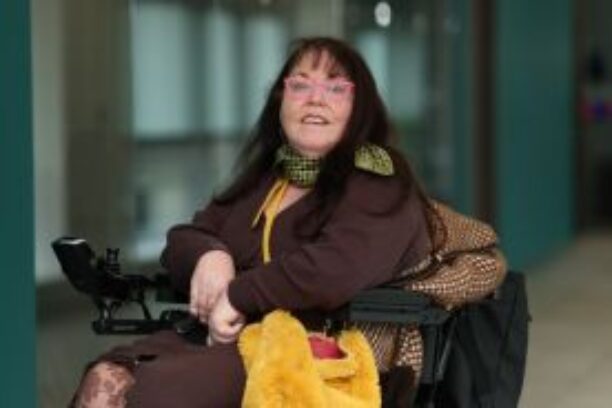








Appendix 4: Attendance at Commission Meetings
The Commission held 8 ordinary plenary meetings. 1 extraordinary meeting of the Commission also took place, to facilitate the recording of time-sensitive decisions between the scheduled ordinary meetings. Commission members receive an annual fee of €7,695.
1 member did not receive any fee under the One Person One Salary principle.
Ordinary meetings:
| Commission Member | Meetings Attended |
|---|---|
| Liam Herrick | 8 of 8 |
| Noeline Blackwell | 7 of 8 |
| Jim Clarken* | 4 of 5 |
| Michael Finucane* | 4 of 5 |
| Dr Andrew Forde | 5 of 8 |
| Caoilfhionn Gallagher KC | 5 of 8 |
| Adam Harris* | 5 of 5 |
| Prof Colin Harvey | 6 of 8 |
| Prof Kathleen Lynch* | 5 of 5 |
| Dr Salome Mbugua | 5 of 8 |
| Dr Rosaleen McDonagh* | 5 of 5 |
| Sunniva McDonagh SC* | 4 of 5 |
| Dr Lucy Michael* | 5 of 5 |
| Prof Ray Murphy | 3 of 5 |
| Eoin Ronayne | 7 of 8 |
*The terms of 8 Commission Members concluded on 30 July 2025
Extraordinary meetings:
| Commission Member | Meetings Attended |
|---|---|
| Liam Herrick | 1 of 1 |
| Noeline Blackwell | 1 of 1 |
| Jim Clarken* | 0 of 1 |
| Michael Finucane* | 1 of 1 |
| Dr Andrew Forde | 0 of 1 |
| Caoilfhionn Gallagher KC | 0 of 1 |
| Adam Harris* | 1 of 1 |
| Prof Colin Harvey | 0 of 1 |
| Prof Kathleen Lynch* | 0 of 1 |
| Dr Salome Mbugua | 0 of 1 |
| Dr Rosaleen McDonagh* | 0 of 1 |
| Sunniva McDonagh SC* | 0 of 1 |
| Dr Lucy Michael* | 0 of 1 |
| Prof Ray Murphy | 1 of 1 |
| Eoin Ronayne | 1 of 1 |
Appendix 5: Attendance at Committees
Legal Casework Committee
| Member | Meetings Attended |
|---|---|
| Michael Finucane (Chair)* | 5 of 5 |
| Liam Herrick | 10 of 10 |
| Noeline Blackwell | 9 of 10 |
| Caoilfhionn Gallagher KC FRSA | 3 of 10 |
| Prof Colin Harvey | 4 of 10 |
| Prof Ray Murphy* | 4 of 5 |
| Dr Andrew Forde** | 4 of 5 |
| Eoin Ronayne** | 2 of 5 |
*Terms concluded on 30 July 2025
**Joined the Committee on interim basis on 24 July 2025
Policy and Research Committee
| Member | Meetings Attended |
|---|---|
| Dr Lucy Michael (Chair)* | 2 of 2 |
| Liam Herrick | 4 of 4 |
| Noeline Blackwell | 2 of 4 |
| Dr Andrew Forde | 3 of 4 |
| Prof Colin Harvey (Chair)** | 4 of 4 |
| Dr Salome Mbugua | 0 of 4 |
| Eoin Ronayne*** | 1 of 2 |
| Caoilfhionn Gallagher KC FRSA*** | 0 of 2 |
*Term concluded on 30 July
**Agreed as chair at meeting of 19 May
***Joined the Committee on interim basis on 24 July
Audit and Risk Committee
| Member | Meetings Attended |
|---|---|
| Aisling McKeon (External Member) | 4 of 4 |
| Jim Clarken | 1 of 2 |
| Eoin Ronayne | 4 of 4 |
| Kathleen Lynch | 0 of 2 |
Disability Advisory Committee
| Member | Meetings Attended |
|---|---|
| Gary Allen | 3 of 3 |
| Jacqui Browne | 1 of 2 |
| Adrian Carroll | 3 of 3 |
| Dr John Bosco Conama | 2 of 3 |
| Michelle (Shelly) Gaynor | 3 of 3 |
| Eliona Gjecaj | 3 of 3 |
| Dr Vivian Rath | 1 of 3 |
| Fiona Anderson | 5 of 5 |
| James Cawley | 2 of 3 |
| Peadar O'Dea | 5 of 5 |
| Aoife Price | 4 of 5 |
| Michael Seifu | 2 of 3 |
| Dr Rosaleen McDonagh | 3 of 3 |
| Adam Harris | 2 of 3 |
| Kevin Stanley | 2 of 2 |
| Gáibhin McGranaghan | 2 of 2 |
| Shiloh Duffy | 2 of 2 |
| Amanie Issa | 2 of 2 |
| Amy Whelan | 2 of 2 |
| Emma Rogan | 2 of 2 |
| Ursula Barry | 2 of 2 |
| Emma Ward | 1 of 2 |
| Fionn Angus Crombie | 2 of 2 |
| Dr Caroline Jagoe | 2 of 2 |
Worker and Employer Advisory Committee
| Member | Meetings Attended |
|---|---|
| Prof Kathleen Lynch (Vice-chair)* | 1 of 2 |
| Dr Salome Mbugua | 0 of 2 |
| Jim Clarken (Chair) | 2 of 2 |
| Eoin Ronayne | 2 of 2 |
| David Joyce (ICTU) | 2 of 2 |
| Deirdre O’Connor (INTO) | 1 of 2 |
| Harry Wall (Ibec) | 2 of 2 |
| Ethel Buckley (SIPTU) | 0 of 2 |
| Seamus Dooley (NUJ) | 0 of 2 |
| Dr Kara McGann (Ibec) | 2 of 2 |
| Aisling Campbell (Accenture) | 1 of 2 |
| Jonathan McDade (Small Firms Association), | 2 of 2 |
| Vivienne Kavanagh (Dublin Bus) | 1 of 2 |
| Katie Morgan (Fórsa) | 1 of 2 |
Appendix 6: Commission staff
The staff complement of the Commission as at 31 December was 88, with the grading structure as follows:
| Grade | Number of staff per grade |
|---|---|
| Chief Commissioner | 1 |
| Director | 1 |
| Principal Officer | 5 |
| Assistant Principal Officer | 21 |
| Higher Executive Officer | 18 |
| Administrative Officer | 10 |
| Legal Executive | 3 |
| Executive Officer | 18 |
| Clerical Officer | 10 |
| Service Officer | 1 |
| Total | 88 |
Appendix 7: Additional financial disclosures
The Commission is funded through a Vote of the Oireachtas. The Director is the Accounting Officer for the Commission’s Vote.
The Appropriation Account 2025 for Vote 25 Irish Human Rights and Equality Commission was submitted to the Comptroller and Auditor General for audit on 11th March 2026.
The Code of Practice for the Governance of State Bodies 2016 requires that bodies make a number of additional disclosures in relation to certain categories of expenditure and remuneration and these are set out below:
Employee short-term benefits breakdown
The number of Department employees whose total employee benefits (including basic pay, allowances, overtime; excluding employer PRSI, employer pension costs) for the financial year fell between €20,000 and €59,999 and within each band of €10,000 from €60,000 upwards are as follows.
| Short-term employee benefits | Number of Employees in Band | |
|---|---|---|
| € | 2024 | 2025 |
| 60,000-69,999 | 5 | 13 |
| 70,000-79,999 | 10 | 2 |
| 80,000-89,999 | 5 | 8 |
| 90,000-99,999 | 3 | 2 |
| 100,000-109,999 | 1 | 3 |
| 110,000-119,999 | 1 | 1 |
| 120,000-129,999 | 1 | 2 |
| 130,000-139,999 | 1 | 1 |
| 140,000-149,999 | - | - |
| 150,000-159,999 | - | - |
| 160,000-169,999 | - | 1 |
| 170,000-179,000 | - | - |
Note: For the purposes of this disclosure, short term employee benefits in relation to services rendered during the reporting period include salary, overtime allowances and other payments made on behalf of the employee, but exclude employer’s PRSI.
| Key management employee benefits | 2024 € | 2025 € |
|---|---|---|
| Commission Member Fees | 97,408 | 64,865 |
| Salary (Including Chief Commissioner) | 542,152 | 796,772 |
| Allowances | 14,790 | 21,032 |
| Termination benefits | - | - |
| Health Insurance | - | - |
| Total | 676,230 | 882,669 |
Key management personnel in the Commission consists of the members of the Commission, including the full-time Chief Commissioner, the Director and the members of the Senior Management Team. Figures represent actual remuneration for the period.
| Chief Commissioner Salary | 2024 € | 2025 € |
|---|---|---|
| Basic Pay | 51,046 | 166,404 |
| Health Insurance | - | - |
| Total | 51,046 | 166,404 |
Mr Liam Herrick was appointed as Chief Commissioner on 25th November 2024. Chief Commissioner role was vacant for part of the year.
*Includes partial year salaries for both outgoing Chief Commissioner and current Chief Commissioner.
| Director Salary | 2024 € | 2025 € |
|---|---|---|
| Basic Pay | 123,274 | 130,490 |
| Health Insurance | - | - |
| Total | 123,274 | 130,490 |
| Consultancy costs | 2024 € | 2025 € |
|---|---|---|
| Advisory | 135,426 | 106,306 |
| Total | 135,426 | 106,306 |
| Travel and subsistence – Domestic | 2024 € | 2025 € |
|---|---|---|
| Commission | 3,575 | 1,690 |
| Employees | 7,602 | 8,903 |
| Travel and subsistence – International | 2024 € | 2025 € |
|---|---|---|
| Commission | 624 | 3,200 |
| Employees | 9,734 | 9,979 |
| Total | 21,535 | 23,772 |
| Hospitality costs | 2024 € | 2025 € |
|---|---|---|
| Staff Hospitality | 0 | 0 |
| Third Party Hospitality | 0 | 2,634 |
| Total | 0 | 2,634 |
Appendix 8: Publications

Appendix 9: 2025-26 Human Rights and Equality Grants Scheme
In 2025, we provided €350,000 for projects under our Human Rights and Equality Grants Scheme.
Twenty-three projects from a range of organisations were awarded grant support, under three strands:
- Applying the Public Sector Equality and Human Rights Duty to combatting disinformation, misinformation, and hate, and building community solidarity and belonging
- Applying the Public Sector Equality and Human Rights Duty in challenging the structural causes of poverty, its impact on people and communities and the effectiveness of the State’s responses; and,
- Applying the Public Sector Equality and Human Rights Duty to ensure a human rights and equality led approach to climate and environmental justice and a just transition.
Grant projects awarded under the 2025-26 Human Rights and Equality Grants Scheme are due for completion in September 2026.
Appendix 10: Your Rights data
The Your Rights Information Service is undergoing a period of transition of service delivery to maximise service impact and end user engagement.
During this transition period, the Your Rights Information Service has ceased taking queries by email and phone and has moved to digital methods of information provision as complimentary forms of service delivery to ensure accessibility are designed. This follows a comprehensive independent review of the Your Rights Information Service in 2024. The independent review of the Your Rights Information Service found a number of shortcomings of the previous method of service delivery, providing information primarily by responding to queries by email, telephone and post, which restricted the potential impact of the service.
Following the appointment of a new dedicated Your Rights Manager, a workplan to address these shortcomings by redesigning the service has been developed. The objective of the redesign is to establish proactive and sustainable methods of providing information about legal rights in accessible formats; which empowers individuals, in particular marginalised and vulnerable communities, to understand their rights, and how to vindicate those rights. Crucially, a core aim of this process is to deliver the Your Rights Information Service in a way that not just meets our legislative responsibility but also addresses real need and adds value.
Below is the data recorded before the service closed.
| Protected Ground | Equal Status Acts | Employment Equality Acts | Intoxicating Liquor Act | Total |
|---|---|---|---|---|
| Age | 22 | 13 | 1 | 36 |
| Civil Status | 3 | 0 | 0 | 3 |
| Disability | 95 | 75 | 0 | 170 |
| Family Status | 4 | 6 | 0 | 10 |
| Gender | 16 | 14 | 0 | 30 |
| Housing Assistance | 17 | 0 | 0 | 17 |
| Race | 36 | 18 | 0 | 54 |
| Religion | 4 | 5 | 0 | 9 |
| Sexual Orientation | 3 | 5 | 0 | 8 |
| Traveller Community | 3 | 0 | 4 | 7 |
| Ground not stated | 19 | 54 | 2 | 75 |
| Total | 222 | 190 | 7 | 419 |
Appendix 11: Monitoring Implementation of the Public Sector Equality and Human Rights Duty
Overview
In January 2026, the Commission re-opened the compliance-monitoring portal to facilitate the monitoring of compliance levels among public bodies with Section 42 (2) of the Irish Human Rights and Equality Commission Act 2014
In total, 289 public bodies were invited on to the portal to review data gathered by the Public Sector Duty monitoring and compliance team. Public bodies were requested to submit a response to our findings via the portal outlining any clarifications or supplementary data relevant to their compliance with the Duty over the year ending 31 December 2025.
The monitoring process aims to ascertain whether public bodies have published, as required by Section 42 of the IHREC Act:
- An equality and human rights assessment.
- Policy plans and actions in place or proposed to be in place to address issues in that assessment.
- A yearly progress report covering achievements in addressing issues identified in the above.
All this information must be set out in a manner that is accessible to the public in the public body’s strategic plan (howsoever described) and annual report.
Results returned from the portal demonstrate a reasonable increase in progress on implementation of the publishing requirements outlined in Section 42(2) of the IHREC Act 2014 since the Commission commenced monitoring in 2023. For the first time the headline figure has moved closer to half of all public bodies (48%) having met their obligations under Section 42 (2) in part or in full, while 94 (33%) are fully compliant with their obligations.
The information presented in this report reflects progress by public bodies on their compliance with Section 42 (2) of the IHREC Act only – namely the requirement to publish relevant information. 289 public bodies were deemed to come into scope of Section 42 of the IHREC Act 2014 for the purposes of this reporting year. Public bodies were divided into 14 thematic sectors for statistical purposes.
Total publication rates
Figure 1 shows that in 2025, 94 (33%) of the 289 public bodies were meeting their obligation under Section 42(2) in full, while 45 (15%) of public bodies had partially met those obligations. This demonstrates a headline figure of 139 (48%) of public bodies meeting their publication obligations in part or in full.
The figures will be presented in a manner which details: Total publication rates which is broken down per publishing status (Published, Partially Published and Not Published) as recorded on our monitoring system and separately broken down for publication of (1) an assessment; (2) policies, plans, actions; (3) reports.
Publishing status in Figure 1 is arrived at based on whether a public body has published the equality and human rights assessment, policies, plans, actions and report required under Section 42.
Equality and Human Rights assessment publication rates
Figure 2 shows that 115 (40%) public bodies completed and published an equality and human rights assessment.
Equality and Human Rights Policy/plans/action publication rates
Figure 3 shows that 134 (46%) of public bodies had set out policies, plans or actions in place or proposed to be put in place to address the issues identified in the assessment in 2025. This is notably higher than the rate of assessments published and by extension the fully published figure for 2025. This is due to a number of bodies setting out detailed action plans while failing to publish an assessment.
Equality and Human Rights report publication rates:
Figure 4 represents the total of public bodies who published a report on their progress. This was slightly higher than the total full compliance rate as a small number of bodies who had published detailed progress reports on actions either didn’t publish their assessment or actions in advance.

Year on year compliance comparative:
There has been a noticeable increase in public bodies publishing some or all the information required under Section 42(2). 94 of the 289 public bodies met their publishing requirements in full (Assess, Address & Report) an increase of 35 from 2024. The percentage of compliant bodies increased by 12% from 20% in 2024 to 33% in 2025. Notably however when compliance rates from 2023 are compared to those from 2025 the rate has risen from 12% to 33 which is a 166% increase since the launch of the compliance monitoring system.
A further 45 (16%) had partially met the publishing requirements (Assess and/or Address only) down 7 (2%) from 2024 which is a result of a number of public bodies improving their position from partially to fully published over the period.
Overall, a headline figure of 139 (48%) of public bodies have taken steps to meet their publishing obligations under Section 42(2). This represents an increase from 110 (38%) in 2024, a 10% increase in total number of bodies meeting the requirements in part or in full. Notably, this figure was 64 (20%) in 2023, showing that there was a rise of 28% in the headline figure. This demonstrates a 117% increase since the launch of the compliance monitoring system.
Progress highlighted in this report belies the fact that 150 (52%) public bodies remain uncompliant with publishing requirements, albeit down 10% from 177 in 2024. It is noteworthy that 57 of the 150 who were recorded as not published did submit a response to the portal, setting out that they were in the process of taking steps to meet their obligations under Section 42. One would expect the publication figures to move in the direction of 68% over the next 2 years. This is a much healthier forecast than would have been predicted at commencement of the compliance monitoring system in 2023. However, it still demonstrates a compliance deficit and non-engagement from 82 (28%) public bodies who have failed to meet any of their obligations or to engage with the Commissions queries.
Sector Spotlight
The statistics further support the effectiveness of training in specific sectors by the Public Sector Training Unit and other equality consultants. The most significant increase since 2023 was in the education and local authority sectors. Looking at the education sector, the increases were primarily from third-level institutions and Education and Training Boards (ETBs). Taking the combined figure of fully and partially published, third-level educational institutions went from 8% up to 84%, while ETBs went from 31% to 74%. If we look at the same criteria for local authorities, we see a rise in compliance from 23% in 2023 to 77% in 2025.
Key Findings
Evidence of compliance with the requirements of the Public Sector Equality and Human Rights Duty continues to improve annually. 48% of all public bodies had met some or all the requirements under Section 42(2) of the IHREC Act, namely, to have conducted an assessment, identified actions to be taken on foot of that assessment, and reported on progress against those actions. There continues to be strong improvements in Government Departments, Local Authorities and the Education Sector which has been influenced by direct supports provided either by the PSD training unit or other equality consultants. However, there remains slow progress in other sectors and very limited evidence of compliance by State Companies. It was noted that only 36% of all bodies under the aegis of a parent department had published anything under Section 42.
In 2023 we reported that many public bodies are producing Equality, Diversity and Inclusion polices and that it was important that clarity is maintained as to the statutory obligations on a public body under Section 42 of the IHREC Act, and that relevant actions are taken to meet those obligations. We reported in 2024 that a shift was noticeable as public bodies began to use Section 42 as a framework for implementing Equality, Diversity and Inclusion policies. This became more prominent in 2025 as many public bodies reorganized their policies to ensure that Section 42 was the primary framework. This is important as EDI policies alone are not an indicator that a public body is compliant with the requirements of Section 42(2) of the IHREC Act.
There were 184 submissions received on the Commissions monitoring portal in 2025. This equates to a 24% annual increase in engagement with the portal indicating a growing recognition of the statutory obligations amongst public bodies.
There is evidence from submissions to the portal of an intention by 57 non-compliant bodies to address future compliance. Taking this figure as evidence of intention to act we can safely arrive at a headline figure of 68% of public bodies who have either met publication requirements or have given details of their plans to implement the Duty.
Overall, a rate of full compliance at 33% remains low for a statutory obligation. It is encouraging however that, as laid out above, for the first time the headline figure of those who are considered to be fully or partially published has moved closer to half of public bodies - an increased rate from 20% to 48% - which demonstrates that there is a growing recognition and understanding of the statutory requirements on public bodies under the Duty.
Click the Download PDF button to download a PDF version of this Annual Report
For more information
Go to Annual Report 2025